



How is decaf made?
“Isn’t decaf full of chemicals?”
Fair question. It depends how it’s made. Every decaf starts as a green coffee bean that has its caffeine taken out before roasting. What takes it out is the part most bags never mention.
See the chemical-free range ↓★ 4.83 from 2,850+ reviews · Roasted to order in Melbourne
All decaf starts with a soak.
It’s how the caffeine is removed. But not every soak is the same.
Solvent
- Green beans are rinsed with a chemical solvent, methylene chloride, that bonds to the caffeineMethylene chloride is listed as a carcinogen in the US and is currently under FDA review, following a petition to ban it from food.
- The beans are then steamed to remove the solvent before roasting
- The method is rarely named on the bag
Water
- Caffeine is drawn out with water, time, and carbon filtration
- No chemical solvents touch the beans
- This process is so clean that even after the entire decaffeination process is complete, the beans can retain Organic Certification.
- Best of all, after the whole process is complete, the most important thing, the taste, is completely intact and unaltered.


How caffeine is removed from our water process decafs

Preparation & Hydration
In preparation for decaffeination, green coffee beans are gently cleaned. This unique approach to hydration naturally expands and sets up the beans to preserve their unique characteristics.

Caffeine Migration
The beans embark on their transformation journey as they meet the natural Green Coffee Extract (GCE), a 100% caffeine and chemical-free symphony of water and coffee’s essential compounds. When the GCE surrounds the beans, diffusion allows only caffeine molecules to migrate from the beans to the water, while all the precious flavour and other compounds remain exactly where they belong - in the coffee.

Drying
The beans then enter dryers - where high air flow and low temperatures create a climate tailored specifically to each origin’s unique character. This custom atmospheric composition ensures consistent moisture profiles and lasting shelf life, preserving the bean’s authentic voice long after decaffeination concludes.

Organic Filtration & Renewal
The caffeine-saturated GCE passes through 100% chemical-free carbon filters that selectively trap caffeine molecules while preserving all other coffee components. This refreshed GCE then continues the cycle with new beans, creating a sustainable, closed-loop process that maintains the coffee’s flavour integrity and organic certification.
Our most popular options by far.

Decaf happens before the roast.
Decaf isn’t a different kind of coffee. It’s the same green bean with one extra step before roasting. Get that step right, roast it fresh, and it tastes like coffee.
Shop chemical-free decaf →2,850+ reviews. 4.83 stars.
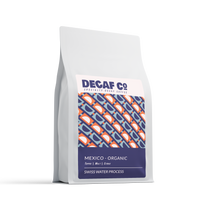
“I have served this amazing coffee to friends at a dinner party and no-one could tell this was a decaf.”
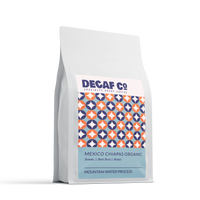
“Excellent decaf coffee - full of flavour and surprisingly rich.”
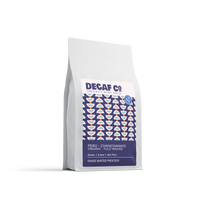
“Really nice decaf coffee with great taste. One of my favourites!”
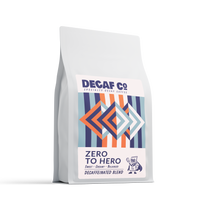
“I love the flavour of the Zero to Hero organic decaf coffee. And I feel good drinking organic coffee that’s been prepared without chemical processes.”